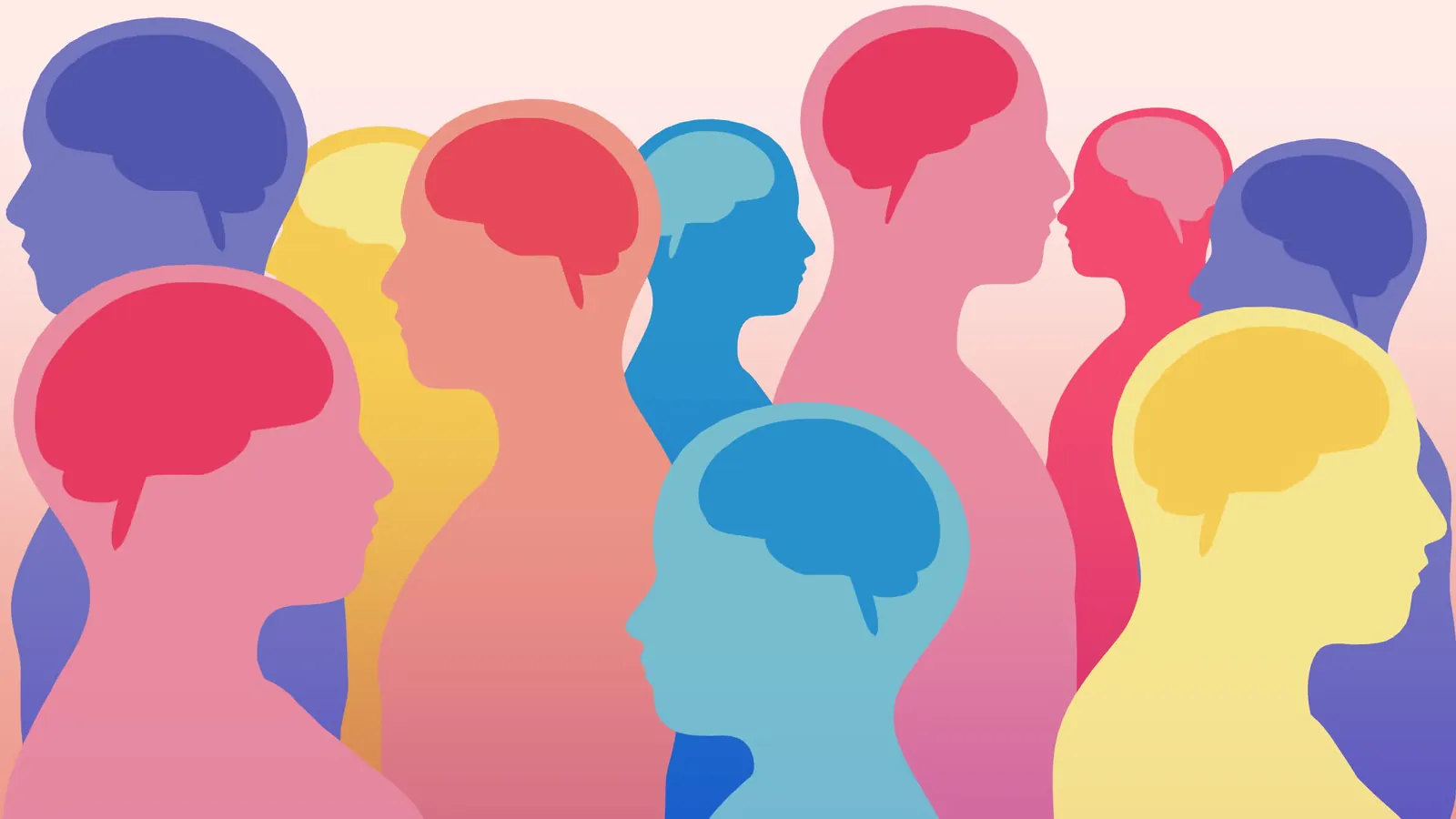
The neurodiversity paradigm was taken up first by individuals on the autism spectrum. Subsequently, it was applied to other neurodevelopmental conditions such as ADHD, developmental speech disorders, dyslexia, dyspraxia, dyscalculia, dysnomia, intellectual disability and Tourette syndrome; and mental health conditions such as bipolarity, schizophrenia, schizoaffective disorder, antisocial personality disorder and obsessive–compulsive disorder. One of the basic ideas of neurodiversity is that it is widespread and these differences should not be viewed as defects that need to be “fixed”.
In this meetup we discussed neurodiversity in a broad sense. We asked questions such as: To what extent are there intrinsic differences between our minds? Does everyone have a similar subjective experience of reality, or do our experiences vary considerably? To what extent is it possible to tell the extent to which our subjective experience varies? To what extent is our internal experience an unalterable part of our nature, and to what extent is it molded by culture and society?
Some relevant books:
The Blank Slate by Steven Pinker
This book argues against the idea that human nature is entirely a result of culture and upbringing. Some criticise it as arguing against a strawman, but the idea that human nature is entirely cultural seems as strong as ever in some academic fields.
Neurotribes by Steve Silberman
This book discusses autism and neurodiversity, particularly how understanding and approach to it has changed over time. (It has rather too much background filler for my liking, but still interesting).
Books by Simon Baron-Cohen
Baron-Cohen is Director of Cambridge University’s Autism Research Centre and an advocate of neurodiversity. His books are short and entertaining although some are controversial.
This was an online event.
Details
When: Monday 20 July 2020, 19:30
Where: Online
Presented by: James
Attended: 27 people